A wildland firefighter can be close enough to the incident command post that commanders see smoke rising from the same hillside, and still be impossible to locate. Ridges block radios. Cell service is a rumor. The one question that matters most in a bad moment, where is the crew and when was that confirmed, often has no good answer.
Edison Aerospace, a Miami aerospace research and development company led by CEO Gene Avakyan, believes it can answer that question for a few hundred dollars per firefighter and an aircraft that can stay aloft most of a shift on rising air. The company has laid out a system that pairs a body-worn sensor node with a long-wing unmanned aircraft that acts as a flying radio tower and, in its newest form, a look-down thermal camera with onboard artificial intelligence that watches the fire line and the people near it.
Avakyan is careful about what the system is at this stage. “The design is complete on paper and the pieces exist,” he wrote in a recent piece describing the concept.
“What comes next is proving the integrated system through controlled tests with real users and real equipment.”
A digital link where the radios go quiet
The idea starts small, on purpose. Each firefighter would carry a node about the size of a deck of cards, clipped to a pack strap. It knows where it is, how much battery it has, and whether its wearer has pressed a distress button. It reads a chest strap for heart rate and breathing, a skin-temperature sensor, and a sweat sensor. It samples the air around the firefighter for temperature and humidity. Crew-leader nodes add carbon monoxide and smoke-particle sensors.
None of that is new on its own. What Edison is proposing is the transport. The nodes talk to each other over LoRa, a long-range, low-power radio band, running Meshtastic, an open-source mesh firmware that turns every node into a relay for every other node. There is no cell tower, no base station, and no subscription. If one node can hear another, the message gets through. The hardware is inexpensive and off the shelf; Edison's own parts list puts a basic body node under $70.
“The useful message is small,” Avakyan wrote. A position fix, a timestamp, a few sensor readings, and a status code fit in a single packet. That is the whole trick: by sending only what matters, the system can use a radio that reaches for miles on milliwatts.
The voice radios firefighters already carry stay exactly where they are. “They do not replace them,” Avakyan wrote of the new messages. The digital link supplements voice with the things voice is bad at: exact positions, confirmed receipts, and a record.
The aircraft is a very tall antenna
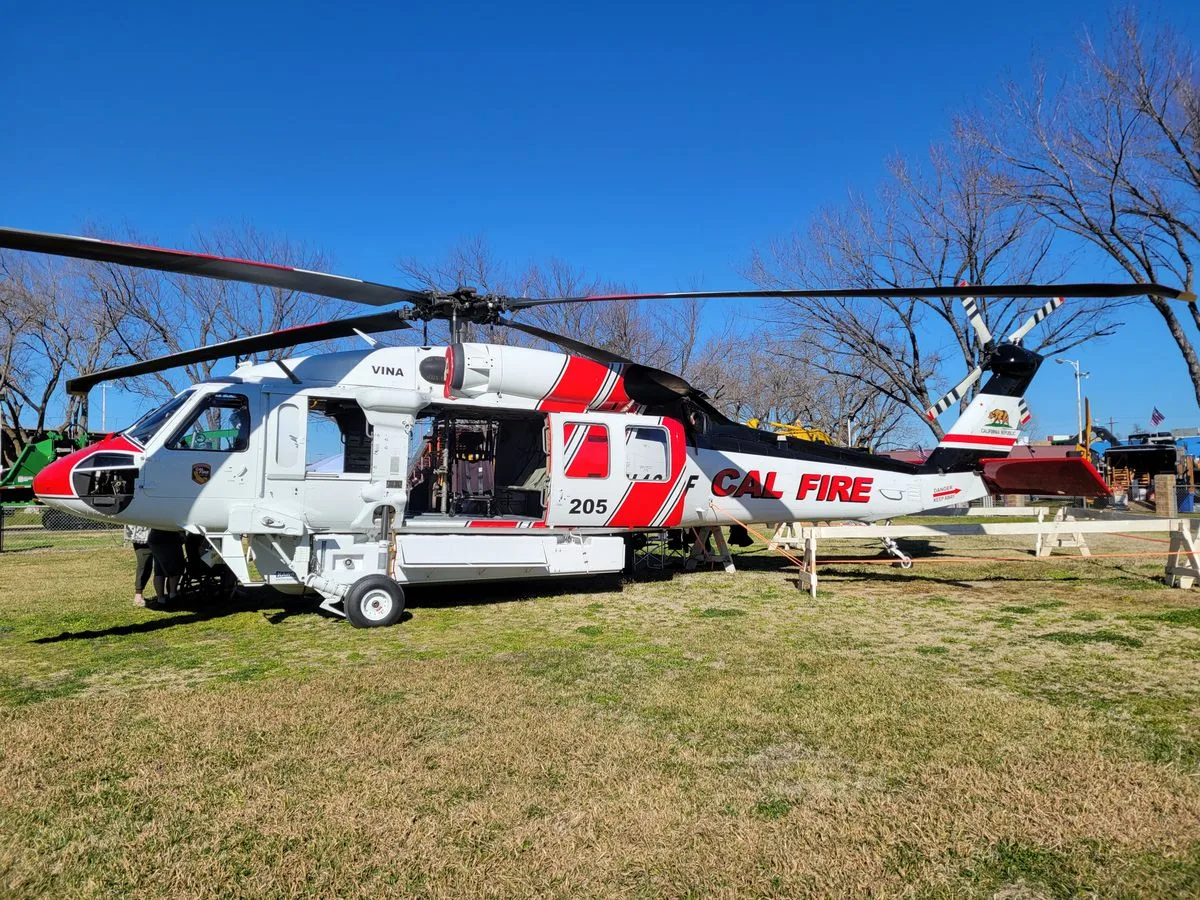
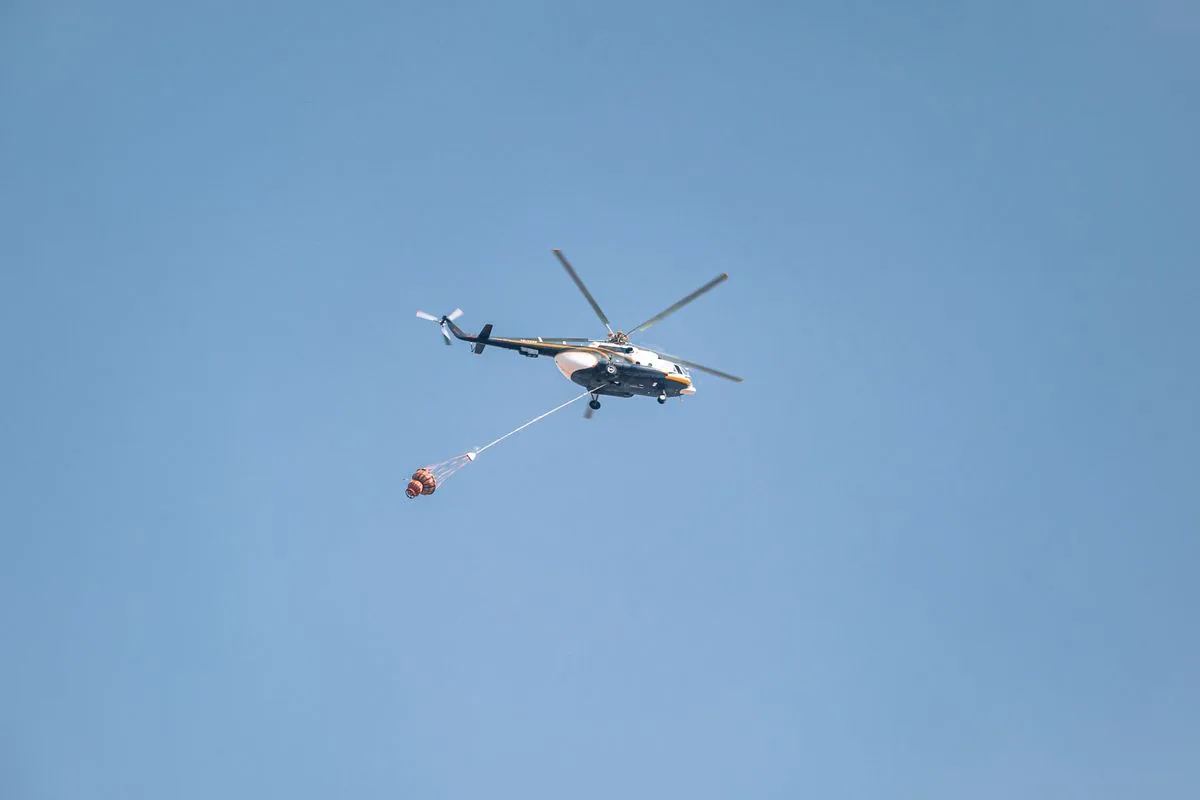
Terrain is the enemy of any ground radio. Edison's answer is to put a relay node where terrain cannot block it: on an unmanned aircraft loitering 1,000 to 2,500 feet above the fire area, standing off to the side rather than orbiting over the flames.
The airframe is Edison's own EDISON High-Endurance Autonomous Aircraft, a 30-foot-span design with eight small electric motors along the wing and a hybrid gasoline-generator-and-battery power system. Its wing is built for soaring. “The endurance idea comes from soaring,” Avakyan wrote.
“A low-wing-loading aircraft climbs on rising air whenever the lift exceeds its sink rate.”
NASA has already demonstrated autonomous thermal soaring with a small powered glider, and Edison's target is a ten-hour relay mission.
The relay payload itself draws under a watt. A second aircraft can take station before the first one leaves, and the handover is measured where it counts, at the command post, where someone is watching to see that the crew updates never stop. A solar-powered repeater on a ridge or a truck mast covers the gaps when weather or firefighting aviation forces the aircraft down.
Edison is equally direct about the airspace. Broadcasting the aircraft's position helps, Avakyan wrote, but it
“does not by itself create separation from manned firefighting aircraft.”
Launch, orbit, recall, and recovery would fit inside the incident's aviation plan. The aircraft carries an FAA-certified transponder so that air-tanker and helicopter pilots see it on their displays.
An eye on the fire line
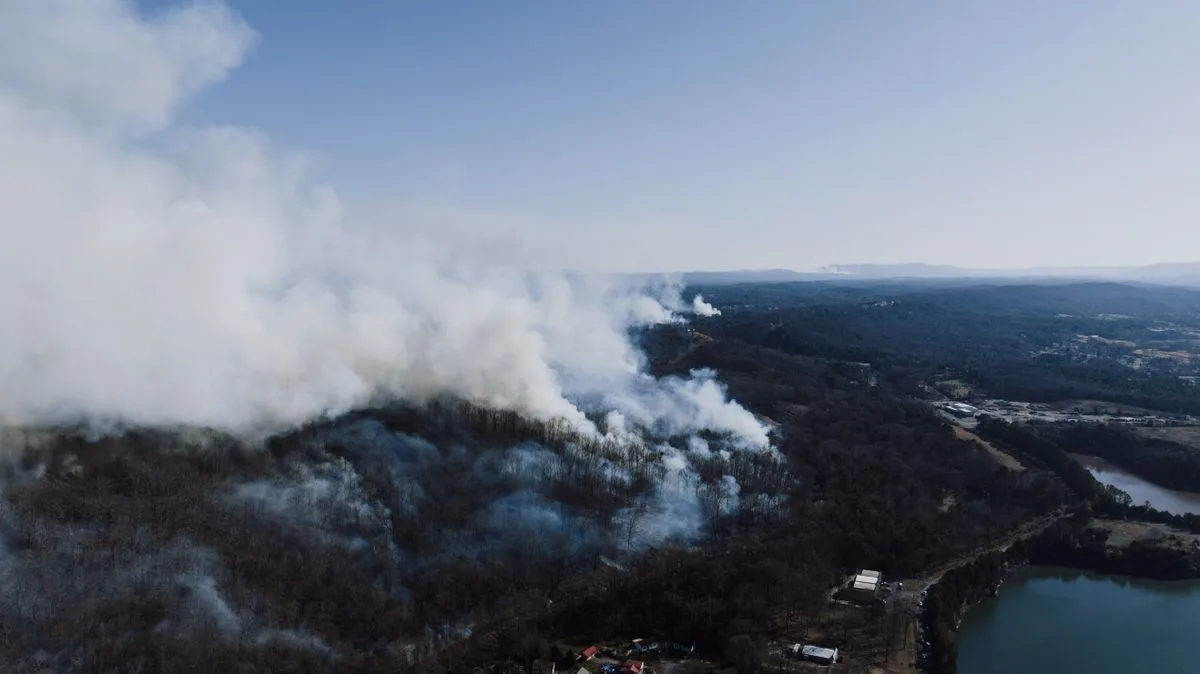
The newest addition turns the relay aircraft into an observer. A thermal camera and a visible-light camera look straight down. An onboard computer, the kind of small AI module now common in robotics, runs machine-vision models that trace the fire's edge, find hot spots, and pick out engines, dozers, and crews on the ground.
The crucial design choice is what the aircraft sends. Not video. The LoRa mesh could never carry it. Instead, the onboard computer sends products: a fire-line outline as a short list of coordinates, hot-spot positions with peak temperatures, and detected resources with a confidence score. Each fits in a packet. Raw imagery goes over a separate, optional higher-bandwidth link only when a commander wants to see it.
At the command post, Edison's AgentPrizm software fuses the fire line, the crew positions, the wind, and the resource picture into one record and generates advisory messages for commanders: a crew whose position sits between a moving fire front and no escape route, a hot spot that has reappeared behind a line, an engine that has not moved in an hour. The advisories are recommendations. A person reads each one, acts or dismisses it, and the decision is logged. The distress path from a firefighter's button to a commander's screen never waits on any of it.
Three states that matter
Much of the engineering in Edison's proposal is about honesty in the data. Every position report carries its own age and uncertainty, so a map marker cannot pretend to be current when it is not. Every sensor reports whether it is working, stale, or out of range.
And every message has one of three states: queued on the node, received at command, or acknowledged by a named person. Only the last one counts. “This is the only state that counts as someone knows,” the company's technical document says.
Health readings get the same treatment. “A number on a screen is not a medical condition,” Avakyan wrote. Skin temperature is not core temperature; a sensor clipped to a pack does not see what the firefighter breathes. In Edison's design, engineers build the instrument and medical and occupational-safety reviewers decide what the readings mean. No automatic medical interpretation ships until they approve it.
Tablets for the squad leaders
Edison also proposes giving squad leaders a rugged Android tablet running ATAK, the mapping app already common in military and public-safety use, paired to the leader's node over Bluetooth. The leader sees the crew's positions, the fire-line overlay from the aircraft, advisories, and short messages, without adding traffic to the mesh. Individual firefighters could carry a phone running the same app in a later phase; for now the company's view is that a head-down screen on the fireline is a cost, not a gift.
The proving ground
Edison's two underlying technologies, Black Swan for secure device identity and message delivery and AgentPrizm for the incident record, come from the company's defense proposals to the Navy, Army, Air Force, and DARPA. The firefighting system is their first civilian outing, and Avakyan has set out a test sequence to earn the trust of the people who would wear it.
“The sequence is deliberate,” he wrote: controlled non-fire tests first, then ground links and sensors on location, then approved short relay flights, then longer sorties, then the complete system. Trials would run alongside established procedures, under incident-command recall, with no reliance on the experimental alerts. Each stage reports its failures and clears a readiness gate before the next begins.
What success looks like, in his words, is simple:
“firefighters and command sharing one clear picture under the worst conditions, knowing which observations are current, which are uncertain, and which messages have reached a person who can act.”
The system does not yet have a name. Edison says it is choosing one that puts the firefighters, not the fire, first.
Sources
1. NASA,
“NASA Experiment Explores Using Thermals to Extend UAV Endurance.”
https://www.nasa.gov/news-release/nasa-experiment-explores-using-thermals-to-extend-uav-endurance/
2. Meshtastic project documentation. https://meshtastic.org/docs/
3. NIOSH, firefighter physiological monitoring. https://stacks.cdc.gov/view/cdc/187847
4. FAA, UAS airspace access.