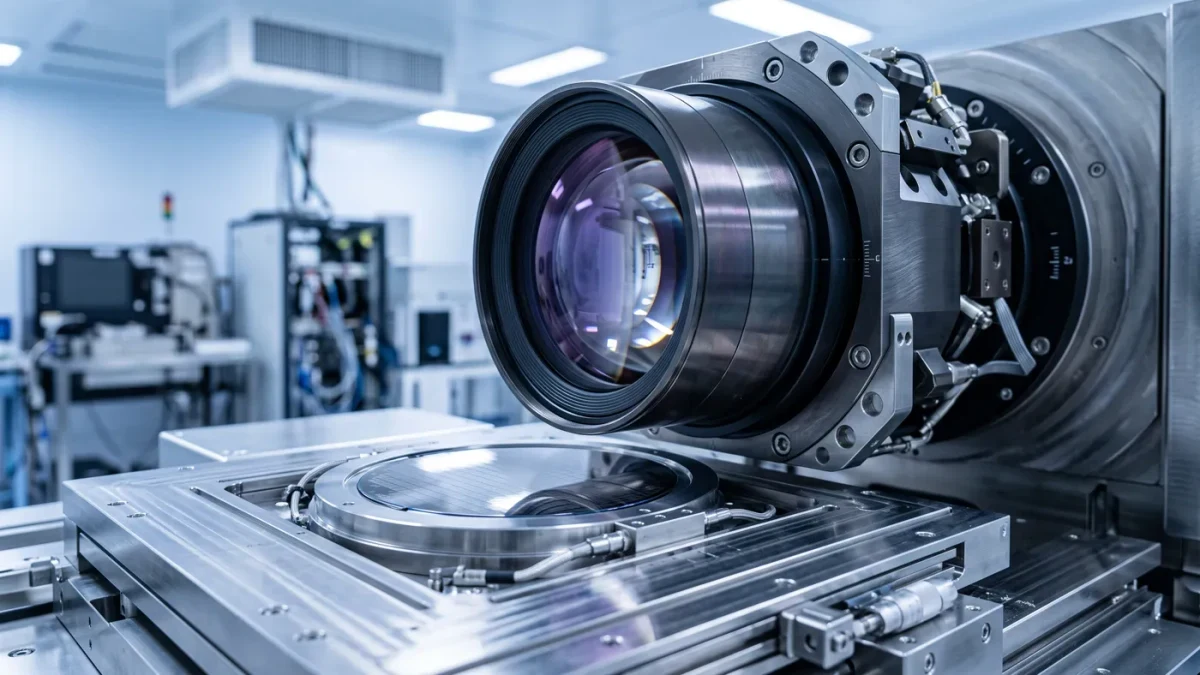
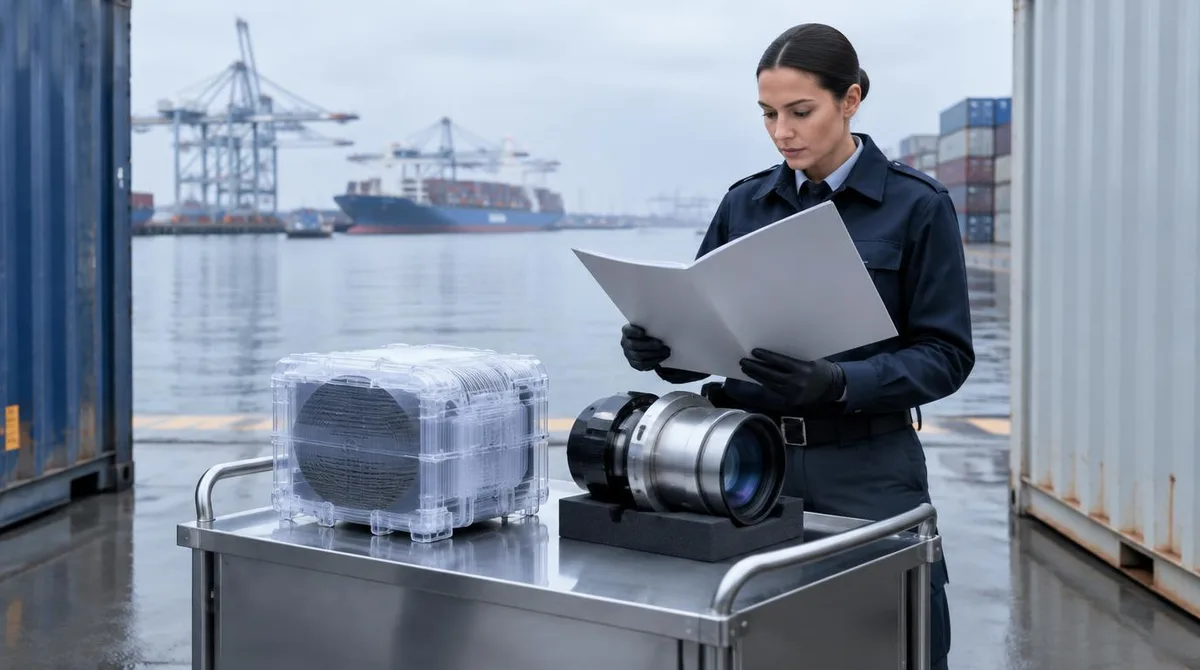
Semiconductor export controls are government licensing rules that decide which chips, chipmaking machines, and chip design software can be sold to which countries, and to which named companies. The seller, not the buyer, carries the legal duty: a chipmaker or toolmaker that ships a controlled item without a license can face penalties at home, regardless of what the buyer wanted. That is who the rules bind first.
The system works through three main levers. Licensing regimes require government permission before certain items leave the country. Entity lists name specific companies that licensed suppliers cannot serve without special approval. Performance thresholds draw a technical line — by chip capability or tool precision — so that older, slower products can flow freely while the most advanced ones cannot. Each lever targets a different point in the supply chain described by the Semiconductor Industry Association, which lays out how chips move from design through fabrication to packaging before reaching customers.
What are semiconductor export controls trying to do?
The stated goal is to slow a rival country's access to the most advanced computing capability — the chips that train large AI models and the machines that make those chips. The logic follows from what a semiconductor is. As IBM explains in its primer on the technology, semiconductors act as tiny electrical switches that turn on and off to control the flow of electricity, and their performance depends on how densely those switches can be packed and how fast they switch. A government that restricts the densest, fastest chips is restricting computing power itself, not just a component.
Controls also serve a second purpose: keeping the domestic lead. Advanced chipmaking depends on a short list of specialized tools and materials. By controlling those exports, the country hosting the toolmakers tries to preserve a gap between its own industry and everyone else's. The gap is the policy product; the licenses are just the valve.
What the controls do not do is stop a country from buying ordinary chips. Most semiconductors in the world are mature-technology parts — the microcontrollers in a washing machine, the power ICs in a car. The regimes are built to be narrow at the top of the performance curve, because a rule that blocked everything would hurt the exporting companies as much as the intended target.
How does a licensing regime actually work?
A licensing regime starts with a control list. Governments publish a catalog of items — chips, lithography machines, etching tools, design software, even certain chemicals — each with a classification code. If an item is on the list, exporting it to a covered destination requires a license application. The exporter describes the item, the customer, and the end use, and the government approves, denies, or conditions the shipment.
Two features make the system bite. The first is extraterritorial reach: rules written by one country can bind companies in others if those companies use the controlling country's technology, software, or equipment. A toolmaker in one country may need permission from another country's government before servicing a fab elsewhere, because its machines contain controlled components. The second is the end-use and end-user check. A license application must state not just what is being sold but what it will be used for and who will operate it. A chip sold for a car factory is a different transaction from the same chip sold to a military research institute.
There are also license exceptions — pre-approved channels for low-risk shipments that let exporters move routine goods without filing paperwork each time. The exceptions are where most of the day-to-day trade flows. The licensing burden is meant to sit on the narrow set of items at the top of the capability curve.
What is an entity list, and why does it matter more than a country rule?
A country rule treats every buyer in a destination the same. An entity list is more surgical: it names specific companies, research institutes, or universities that suppliers cannot serve without a license, wherever they happen to be located. This matters because sophisticated buyers route around country-level rules through subsidiaries, shell distributors, and third-country resellers. A named-entity approach follows the organization, not the address.
For a supplier, an entity listing is a hard operational fact. Sales teams must screen every customer against the list. A shipment to a listed company's new subsidiary can require a fresh legal analysis, because ownership chains matter. The compliance cost falls on the exporter, which is why large chip and tool companies maintain dedicated trade-compliance departments — the rules are part of their cost of doing business.
The entity-list mechanism also creates a strange asymmetry the headlines rarely explain. Two customers in the same city, buying the same chip, can face completely different rules because one appears on a list and the other does not. The chip is identical; the paperwork is not.
How do performance thresholds draw the line?
Thresholds are the technical heart of the regime. Instead of listing chip models by name, governments write numeric criteria — a measure of processing performance, interconnect speed, or manufacturing precision — and everything above the line is controlled. The approach scales: when a new generation of chips arrives, the rule catches it automatically if it clears the threshold, without a new regulation for every product.
The same technique applies to chipmaking equipment. Lithography and etching tools are controlled by their resolution and process capability, so a tool that can pattern the finest features is restricted while an older tool is not. This is why threshold announcements matter to equipment makers as much as to chip designers: moving the line reclassifies existing products overnight.
Thresholds also explain the workaround game. A chipmaker facing a threshold can design a product that sits just under the line — slightly slower interconnects, slightly reduced performance — and ship it legally. Regulators respond by adjusting the criteria, and the cycle repeats. The threshold is less a wall than a moving fence, and both sides know it.
Who is bound — and who is simply affected?
Three groups carry direct legal duties. The first is the exporters: chip designers, foundries, equipment makers, and software vendors headquartered in, or using technology from, the controlling country. The second is re-exporters: distributors and intermediaries who move controlled items across additional borders. The third is in-country users of the rules, such as banks and logistics firms, whose services can be restricted when they knowingly support a controlled transaction.
A fourth group is affected without being bound: buyers in the target country, whose access narrows; and neutral-country manufacturers, who may lose sales or gain them as demand reroutes. The fabless model sharpens the stakes. As covered in iInnovate Mag's explainer on how chip companies decide what to build and what to buy, a fabless designer depends entirely on foundry capacity it does not own — so an export rule that touches its foundry partner can cut it off from a market without a single new rule naming it. This connects to our earlier piece, Fabless vs Fab: How Chip Companies Decide What to Build and What to Buy.
Enforcement is the last piece. Exporters must keep records, report suspicious inquiries, and sometimes notify the government when a customer's stated end use looks wrong. Violations bring civil penalties and, in serious cases, criminal charges against individuals. The compliance burden — screening, licensing, record-keeping — is a real cost, and it is one reason trade groups such as the SIA engage actively in the rulemaking process.
What this means for the market
Our analysis of the mechanics points to three durable effects. First, controls create a two-tier market: unrestricted older-generation products compete freely worldwide, while leading-edge capability becomes scarce and strategically priced in the restricted tier. Second, the rules accelerate substitution. Any country facing restrictions has a strong incentive to fund its own domestic toolmakers and fabs, which is the predictable long-term consequence of the policy — a bet that the lead can be preserved faster than the target can build alternatives.
Third, compliance itself reshapes the industry. Screening requirements, ownership-chain checks, and license timelines favor large suppliers with legal departments over small ones, and they make supply agreements longer and more cautious. The under-the-threshold product category, meanwhile, becomes a genuine market segment: chips engineered specifically to ship legally into restricted markets, trading a little performance for market access.
What remains unknown is where the thresholds settle. Every adjustment to a control list reclassifies products and reroutes revenue, and the technical criteria are reviewed as capabilities advance. For readers tracking the sector, the number to watch is not a headline announcement but the rule text itself: the threshold values, the entity names, and the license exceptions. Those three documents — not the press release — are where the policy actually lives. For the manufacturing side of the same story, see iInnovate Mag's piece on what a semiconductor wafer is and why yields decide chip prices. For related coverage, see What a Semiconductor Wafer Is and Why Yields Decide Chip Prices.