Clean hydrogen and carbon capture are the two workhorses of climate technology, and both are simpler to state than to build. A Congressional Research Service report dated October 3, 2024 records that the most widespread hydrogen production pathway in the United States and globally is steam methane reforming, which uses natural gas as the feedstock.
What is hydrogen actually used for, and why does its color matter?
The CRS report is precise on usage: hydrogen is predominantly used today for industrial processes, including petroleum refining and ammonia production, with emerging and potential applications in storing energy, heating, and replacing natural gas in certain functions. None of that is new — refineries have consumed hydrogen for decades. What changed is the emissions accounting: producing hydrogen from natural gas releases carbon dioxide, so the climate value of any hydrogen claim depends entirely on the production pathway behind it.
That is where the informal color labels come from. Hydrogen made by steam methane reforming without emissions controls is called grey; the same process with captured CO2 is called blue; hydrogen split from water using renewable electricity in an electrolyzer is called green. The labels matter to buyers and policymakers because two chemically identical molecules carry radically different carbon footprints depending on the pathway. The CRS notes that various production methods can use energy to extract hydrogen from feedstocks including fossil fuels, biomass, and water — and that the choice of feedstock and pathway determines both cost and environmental impact.
How does carbon capture and storage work?
Carbon capture and storage (CCS) is a chain of three industrial operations rather than one machine. CO2 is separated from a flue gas stream or directly from the air, compressed, then transported — typically by pipeline or ship — to a storage site, where it is injected into deep geological formations intended to hold it permanently. The Global CCS Institute, the sector's main institutional body, describes itself as advocating for carbon capture and storage as a critical climate solution and as bringing together technical, economic, and policy expertise across the CCS value chain — capture, transport, and storage each being distinct industries with distinct costs.
The institute's Global Status of CCS report, its flagship annual publication, provides data and analysis on projects, policy, and progress worldwide — in the institute's own description, its definitive resource tracking deployment. That tracking exists because CCS progress has been slower and more expensive than early projections: projects must solve chemistry at the capture step, permitting at the storage step, and economics across the whole chain. A capture plant attached to a source with no permitted storage site is a stranded asset, which is why the institute's project-level data matters more than aggregate capacity announcements.
Why do the two technologies keep appearing together?
Because steam methane reforming plus carbon capture is the near-term route to lower-carbon hydrogen at industrial scale. The CRS report identifies SMR as the dominant US and global pathway, and gasification of coal as a less widespread but commercially mature alternative — both fossil pathways, both emitters, and both candidates for bolting capture equipment onto the production plant. Blue hydrogen is simply that combination with a marketing name.
The pairing also exposes the dependency: if capture is incomplete or storage leaks, the climate case collapses. This is why independent measurement of captured volumes and stored CO2 — the kind of project data the Global CCS Institute tracks annually — matters more than announced capacity. Announcements describe intent; injection records describe outcomes. The CRS framing for Congress makes the same point from the policy side: the choice of pathway carries implications for cost and environmental impact, which is exactly what legislation and tax credits attempt to price.
What should readers watch to know if any of this is working?
Three indicators, all verifiable in public records rather than press releases:
- Hydrogen production volumes by pathway — electrolyzer capacity displacing SMR volumes rather than adding to them is the signal green hydrogen is real.
- CO2 injection rates at named storage sites, not capture capacity announcements — a project that captures but cannot store has solved a third of the problem.
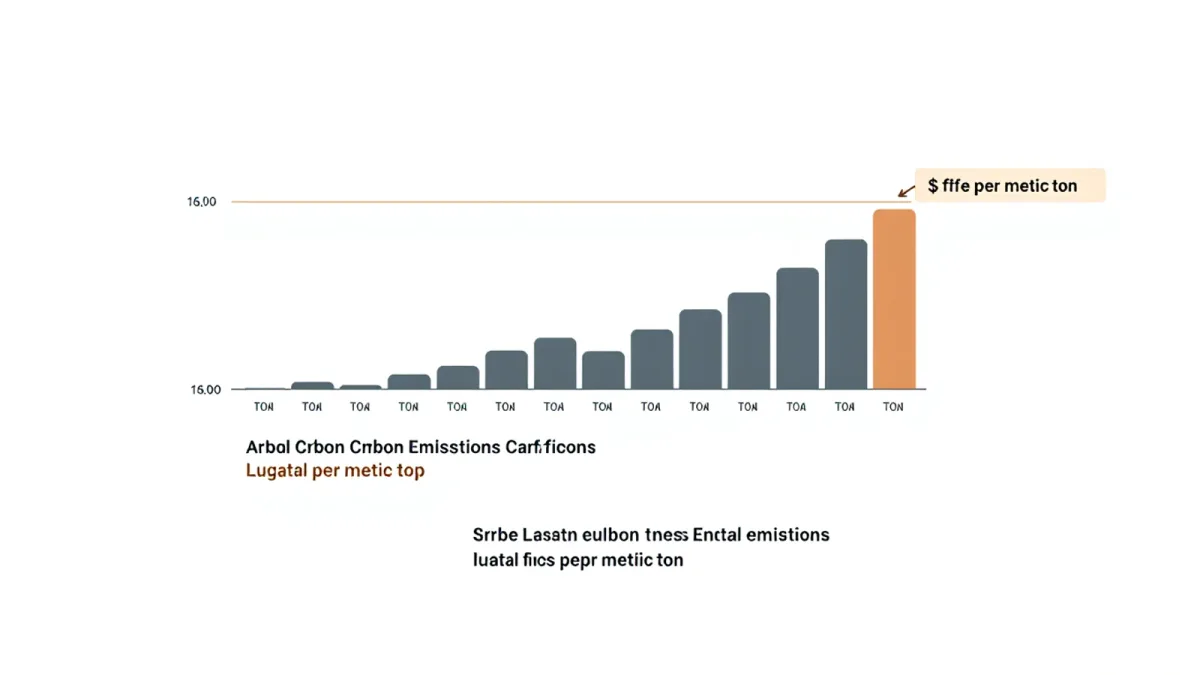
- Cost per tonne of CO2 stored, the number that determines whether CCS scales through markets or only through subsidy.
Each indicator cuts through a specific kind of noise. Pathway volumes expose the grey-hydrogen relabeling problem; injection rates separate engineering reality from renderings; cost per tonne decides whether the whole chain survives the end of any given subsidy program.
Is any of this realistic at the scale claimed?
The honest summary is that both technologies are in industrial adolescence: mature enough to deploy at demonstration scale, expensive enough that policy support — of the kind the CRS report catalogs for Congress — remains the deciding variable. Hydrogen already moves through a real industrial economy at vast scale; what is new is decarbonizing that flow. CCS has operated at commercial sites for decades in specific niches; what is new is multiplying those sites across cement, steel, and power.
The physics is settled in both cases. The open questions are cost curves, permitting timelines, and monitoring regimes — bureaucratic variables that no molecule or machine can settle on its own. Readers who want to track the sector seriously are better served by the annual project data than by any single launch announcement, because in climate technology, unlike software, deployment is measured in decades and tonnes.
What is direct air capture, and where does it fit?
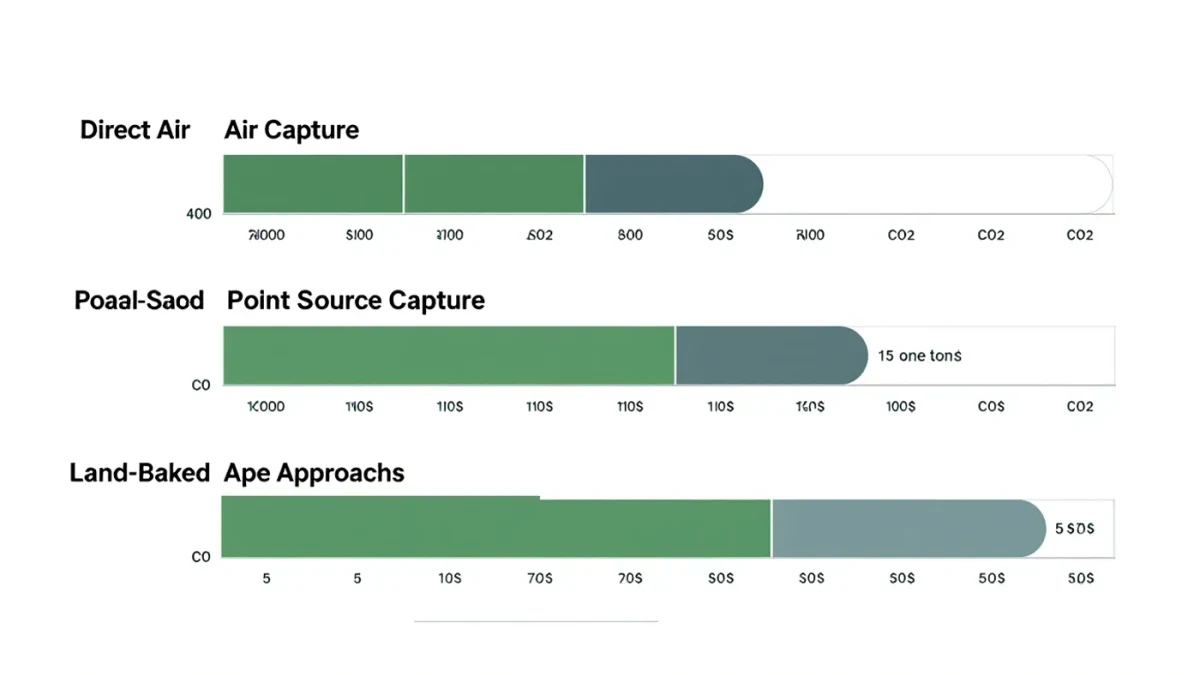
Direct air capture (DAC) is the small sibling in the family: instead of scrubbing CO2 from a concentrated exhaust stream, it pulls carbon dioxide out of ordinary air, where the concentration is far lower. That dilution is the whole engineering problem — the machines must move enormous volumes of air to harvest comparatively little CO2, which is why DAC carries a higher cost per tonne than capture attached to a factory chimney. The CRS report's framing of production and capture choices as a cost-and-impact spectrum applies here too: no single pathway wins on every axis, and the fit depends on the emission source.
Its role is narrow but distinct from point-source capture. Industrial capture reduces emissions that would otherwise occur; DAC removes carbon already emitted, which matters for historical emissions and for sectors where no capture retrofit is practical. The same verification rule applies to both: captured tonnes must be measured, transported, and stored with documentation at each step, because a removal claim without an injection record is a promise, not a tonne. Readers evaluating any DAC announcement should ask the same three questions — volumes by pathway, injection records, cost per tonne — before treating a pilot as a trend.