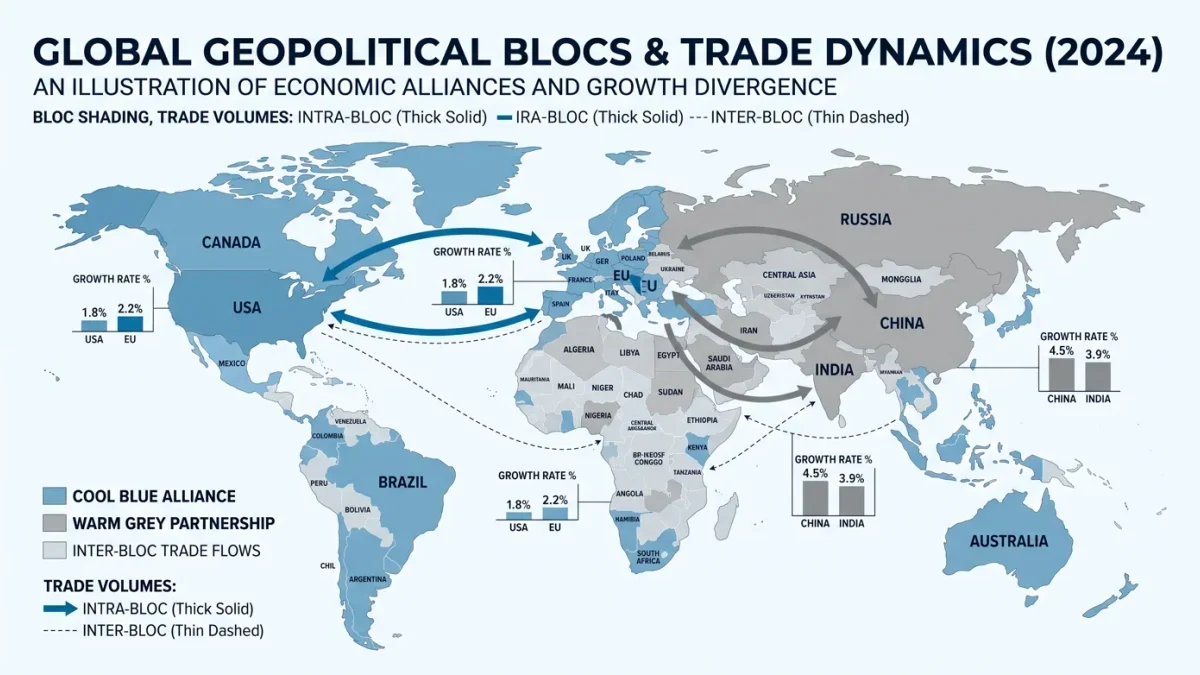
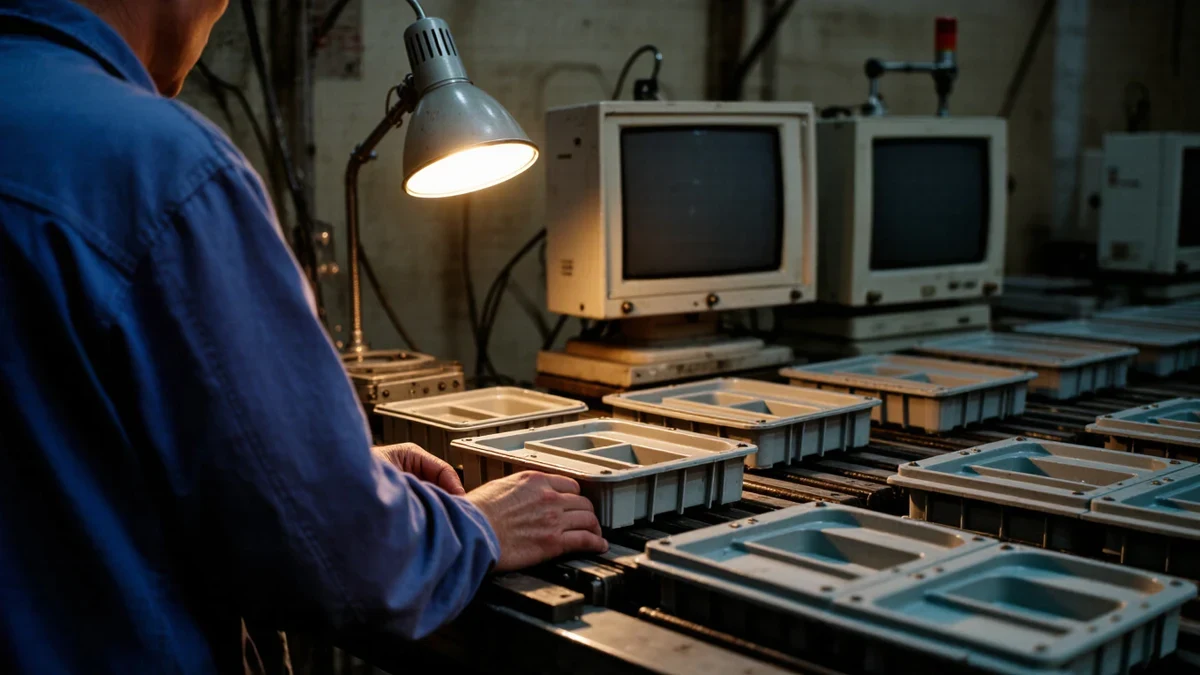
A consumer electronics supply chain is a tiered global network in which a brand designs a product, contract manufacturers assemble it, and hundreds of specialized suppliers feed components upward through the tiers. Apple's $600 billion four-year US investment program, announced August 6, 2025, illustrates how political and cost pressures are redrawing the map (announced).
What does the tier structure actually look like?
Brands sit at the top and rarely make anything. Below them sit the firms that physically build products — assemblers that take delivery of thousands of components and run them through surface-mount lines into finished devices. Below the assemblers stretch the component tiers: module makers, chip packagers, wafer fabs, and raw materials processors, each several steps removed from the consumer.
| Tier | Who they are | What they supply |
|---|---|---|
| Brand (OEM) | Product companies (e.g., Apple) | Design, specs, demand signal |
| Assembly (EMS/ODM) | Contract manufacturers | Final assembly, test, packaging |
| Tier 1–2 | Module and component makers | Displays, cameras, batteries, boards |
| Tier 3+ | Fabs, refiners, miners | Wafers, chemicals, rare earths, metals |
The tiers explain a recurring consumer mystery: why one factory disruption shelves a product. A missing $2 part at tier three halts the entire stack above it, because modern electronics are assembled just-in-time with almost no redundancy anywhere in the system.
Each tier also has its own economics. Brands capture design and margin; assemblers compete on yield and cost; component makers live or die on process leadership. When an OEM squeezes prices, the pressure cascades downward until it lands on the least powerful tier — usually the refiners and material processors at the bottom.
The stack is also where product strategy hides. A brand that designs its own silicon — as Apple does — moves a tier's profit inside its walls; a brand that buys commodity chips rents that tier instead. Vertical integration decisions are visible in supplier announcements long before they reach a keynote stage, which is why analysts read component-maker earnings calls the way others read product launches.
Why did assembly concentrate in Asia?
Because the entire tier stack clustered there, not just the final screwdriver. Assembly lines need dense networks of nearby component suppliers, trained labor pools, and logistics infrastructure, and those networks compounded in East and Southeast Asia over three decades. Apple's own disclosure that suppliers already manufacture its silicon in 24 factories across 12 states (announced, February 24, 2025) shows how thin the onshore slice of that stack still is for even the largest buyer.
Concentration also lives in process equipment and materials — the machines that make chips and the refined inputs that feed them — where a handful of firms serve every consumer brand simultaneously. That is why a supply chain story is rarely about one company; every OEM shares suppliers with its competitors, and a disruption at a shared node hits the whole market at once.
Labor cost, the usual headline explanation, is the smallest part of the story. Assembly labor is a low single-digit percentage of a device's cost; the real gravitational forces are supplier density, speed of engineering changes, and the sheer difficulty of moving a network rather than a factory.
What is reshoring actually changing?
More than headlines suggest, but less than press releases imply. Apple's August 2025 announcement — a new $100 billion commitment bringing the total to $600 billion over four years — includes the American Manufacturing Program, which the company says will incentivize global companies to manufacture more critical components in the United States (announced).
The same announcement noted that roughly two-thirds of the US-made components in Apple products are exported to customers outside the US — a reminder that onshoring often means building components in America for global assembly, not relocating final manufacturing wholesale. The fabs rising in Arizona make wafers for the world, not only for American devices.
The February 2025 commitment that framed the wave — more than $500 billion in planned US spending across AI, silicon engineering, and skills development (announced) — shows the pattern: large, multi-year, purpose-flexible commitments whose fulfillment is measured over a political and product cycle, not a quarter. The checkable facts are the announced figures themselves, dated and sourced.
How does a product actually move from design to shelf?
A simplified path, in the order the industry runs it:
- Design and specification: the brand freezes the bill of materials and qualification requirements.
- Supplier qualification: audited suppliers win component slots against spec and capacity targets.
- Tooling and pilot ramps: tooling and pilot lines prove yield before volume commitments.
- Mass production: assemblers run at forecast volume while quality teams track defects in parts per million.
- Logistics and channel: finished units move by sea and air to distribution, then retail shelves and direct fulfillment.
Each stage gates the next, and a failed qualification at step two can add a quarter at step four. The whole chain is rehearsed before launch, which is why leaked case molds and supplier orders are such reliable product intelligence — the physical chain cannot help leaking.
How do brands audit a chain this deep?
Through standards bodies and shared audit infrastructure, because no single OEM can police thousands of facilities. Shared programs for minerals sourcing, factory conditions, and environmental reporting let competitors split the cost of verifying a common supplier base; Apple's supplier-responsibility reporting, with its published training and audit figures, is the most visible example of the practice.
The honest limit of auditing is depth. A brand can require its assemblers to follow a code of conduct, but visibility thins with every tier below, and the raw materials at the bottom of the stack are the hardest to trace and the easiest to obscure. Auditing improves the chain; it does not make it transparent.
Tariffs and geopolitics supply the current forcing function. When import costs or export controls shift, OEMs do not relocate factories overnight — they reweight where new capacity is added, which is exactly what the announced US commitments describe: new component plants and assembly incentives layered onto an unchanged Asian base. The map is being redrawn at the edges, not replaced.
What should a buyer take from all this?
That a gadget's country of assembly says little about where its value was made — design, wafers, optics, and materials each carry different geographies inside one device. And that announced investment totals are commitments with labels, not delivered factories; the record to watch is which components, in which stated volumes, start shipping from new plants — the only milestone that turns an announcement into a supply chain.
For readers who follow the industry rather than a single brand, the tier map is also a forecasting tool. Component makers' capacity plans surface a year or more before finished products; fab construction schedules precede chip availability by longer still. The supply chain tells observant readers what next year's devices will contain before anyone announces a device at all.